Español
 Português
“The Spirit Level”, Why Equality is Better for Everyone, By Richard Wilkinson and Kate Picket, 2009, page 113
The Intelligence Is Changing
Personal Comment
Are There Only Two or Three or Eight Types of Intelligences?
Personal Comment
Are There Only Two or Three or Eight Types of Intelligences?
I do not think so...
Because like “Fyodor Dostoevsky” said: Do not let us forget that the causes of human actions are usually immeasurably more complex than our subsequent explanations of them.
For me affirm that we have only eight types of intelligence sound like said: “the left hemisphere of our brain only works with unconscious, and the right hemisphere only works with conscious”.
 In my opinion: There are so many intelligences how persons exist in our planet. Furthermore the performance of our intelligence change during the day (morning, afternoon, evening), even more though months and years, according our personal situation and life experience.
 We must remember the evidence that our performance and behavior in educational task can be severe affected by the way we feel when are seen and judged by others (*).
However these theories are really useful to improve our academic performance or to improve our speeding of learning. Why?
 Because...
If the parents and teachers give their children one environment with tolerance and real interest, the students will give them their best performance. So read, increase your knowledge of these theories of intelligence, think about them; and the most important practice with sincerely and love is better for everyone.
 (*) UNEQUAL LEARNING OPPORTUNITIES
In 2004, World Bank economists Karla Hoff and Priyanka Pandey reported the result of a remarkable experiment. They took 321 high-caste and 321 low-caste 11 to 12 year-old boys from scattered rural villages in India, and set them the task of solving mazes.
First, the boys did the puzzles without being aware of each other’s caste. Under this condition the low-caste boys did just as well with the mazes as the high-caste boys, indeed slightly better.
 Then, the experiment was repeated, but this time each boy was asked to confirm an announcement of his name village, father’s and grandfather’s names, and caste. After this public announcement of caste, the boys did more mazes, and this time - The performance of the low-caste boys dropped significantly.
This is striking evidence that performance and behavior in an educational task can be profoundly affected by the way we feel and we are seen and judged by others. When we expect to be viewed as inferior, our abilities seen to be diminished.
Because like “Fyodor Dostoevsky” said: Do not let us forget that the causes of human actions are usually immeasurably more complex than our subsequent explanations of them.
For me affirm that we have only eight types of intelligence sound like said: “the left hemisphere of our brain only works with unconscious, and the right hemisphere only works with conscious”.
 In my opinion: There are so many intelligences how persons exist in our planet. Furthermore the performance of our intelligence change during the day (morning, afternoon, evening), even more though months and years, according our personal situation and life experience.
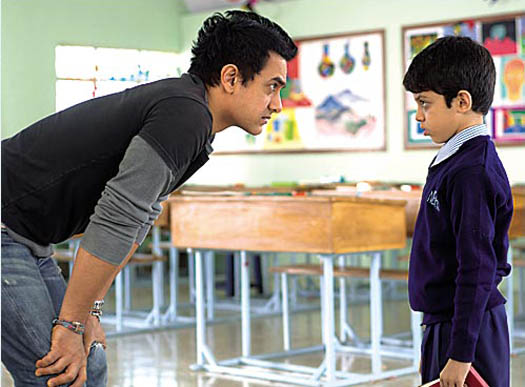 We must remember the evidence that our performance and behavior in educational task can be severe affected by the way we feel when are seen and judged by others (*).
However these theories are really useful to improve our academic performance or to improve our speeding of learning. Why?
 Because...
If the parents and teachers give their children one environment with tolerance and real interest, the students will give them their best performance. So read, increase your knowledge of these theories of intelligence, think about them; and the most important practice with sincerely and love is better for everyone.
 (*) UNEQUAL LEARNING OPPORTUNITIES
In 2004, World Bank economists Karla Hoff and Priyanka Pandey reported the result of a remarkable experiment. They took 321 high-caste and 321 low-caste 11 to 12 year-old boys from scattered rural villages in India, and set them the task of solving mazes.
First, the boys did the puzzles without being aware of each other’s caste. Under this condition the low-caste boys did just as well with the mazes as the high-caste boys, indeed slightly better.
 Then, the experiment was repeated, but this time each boy was asked to confirm an announcement of his name village, father’s and grandfather’s names, and caste. After this public announcement of caste, the boys did more mazes, and this time - The performance of the low-caste boys dropped significantly.
This is striking evidence that performance and behavior in an educational task can be profoundly affected by the way we feel and we are seen and judged by others. When we expect to be viewed as inferior, our abilities seen to be diminished.
“The Spirit Level”, Why Equality is Better for Everyone, By Richard Wilkinson and Kate Picket, 2009, page 113