If you enter the keywords “birth to three” into a search engine on your computer, you get an impressive number of websites explaining that your child’s first three years are crucial for his/her future development and that practically
everything is decided at this age. You will also find numerous commercial products prepared to stimulate your young child’s intelligence, before reaching this all-important threshold age.

Some physiological phenomena that take place during brain development can, indeed, lead to beliefs that the critical learning stages occur between birth and age three. But it can be easily exaggerated and distorted. It takes on
mythical status when it is
overused by certain policy makers, educators, toy manufacturers, and parents, who overwhelm their children with gymnastics for newborns and stimulating music in tape recorders and CD players attached above the baby’s bed.
What are the physiological phenomena that research has uncovered which are relevant to this belief?
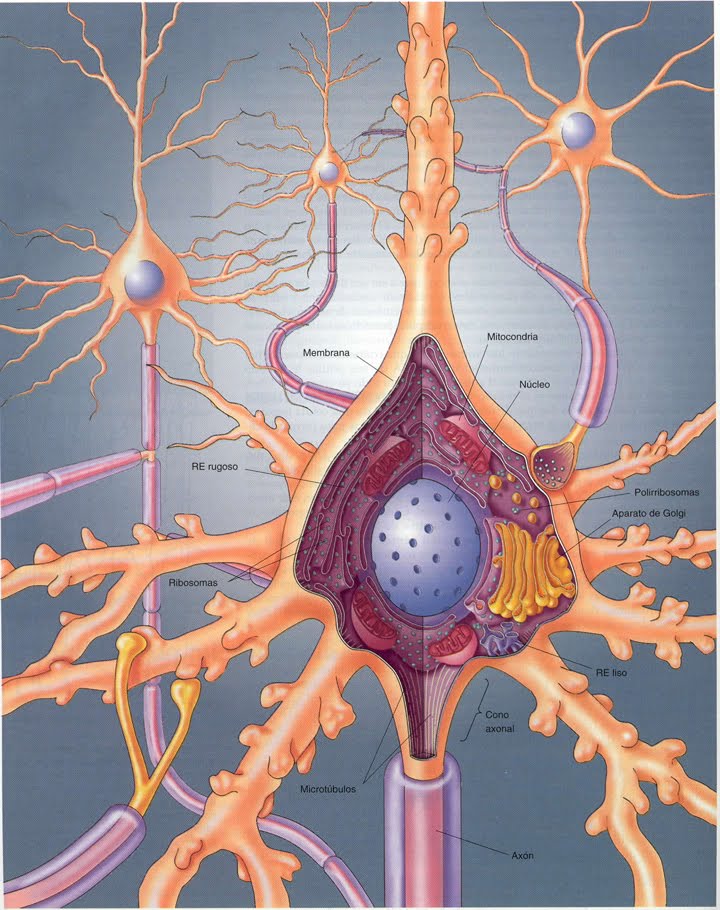
The basic component of information processing in the brain is the nerve cell or neuron. A human brain contains about 100 billion neurons.

Each one can be connected with thousands of others, which allows nerve information to circulate intensively and in several directions at a time. Through the connections between neurons (synapses), nerve impulses travel from one cell to another and support skill development and learning capacity. Learning is the creation of new synapses, or the strengthening or weakening of existing synapses.

Compared to an adult, the number of synapses in newborns is low. After two months of growth, the synaptic density of the brain increases exponentially and exceeds that of an adult (with a peak at ten months). There is then a steady decline until age 10, when the “adult number” of synapses is reached. A relative stabilisation then occurs. The process by which synapses are produced en masse is called synaptogenesis. The process by which synapses decline is referred to as pruning. It is a natural mechanism, necessary for growth and development.

For a long time, science believed that the maximum number of neurons was fixed at birth; unlike most other cells, neurons were not thought to regenerate and each individual would then lose neurons regularly. In the same way, following a lesion of the brain, destroyed nerve cells would not be replaced. For the past twenty years, findings have changed this view by revealing hitherto unsuspected phenomena:
new neurons appear at any point in a person’s life (neurogenesis) and, in some cases at least, the number of neurons does not fluctuate throughout the lifetime.
That said, synaptogenesis is intense in the very early years of life of a human being. If learning were to be determined by the creation of new synapses – an idea with some intuitive appeal – it is a short step to deduce that it is in the early years of a child when (s)he is most capable of learning. Another version, more current in Europe, is the view that very young children must be constantly stimulated in their first two to three years in order to strengthen their learning capacities for subsequent life. In fact,
these claims go well beyond the actual scientific evidence.
An experiment conducted twenty years ago may, however, have fuelled such a myth. Laboratory studies with rodents showed that synaptic density could increase when the subjects were placed in a complex environment, defined in this case as a cage with other rodents and various objects to explore. When these rats were subsequently tested on a maze learning test, they performed better and faster than other rats belonging to a control group and living in “poor” or “isolated” environments (Diamond, 2001). The conclusion was that rats living in “enriched” environments had increased synaptic density and were thus better able to perform the learning task.
The elements were in place to create a myth: a great experiment, rather easy to understand even if difficult to perform, and findings that project the expected outcome.
The experiment, however, took place in the laboratory in highly artificial conditions.It was conducted on rodents. Non-specialists twisted experimental data on rats, obtained with unquestionable scientific precision, and combined it with current ideas concerning human development to conclude that educational intervention, to be more effective, should be co-ordinated with synaptogenesis.

Alternatively, they suggested that, “enriched environments” save synapses from pruning during infancy, or even create new synapses, and thereby contribute to greater intelligence and higher learning capacity.
This is a case of using facts established in a valid study to extrapolate conclusions that go well beyond the original evidence.
The limits and lessons in this case are rather clear. There is little human neuroscientific data on the predictive relationship between synaptic density early in life and improved learning capacity. Similarly, little is available regarding the predictive relationship between the synaptic densities of children and adults. There is no direct neuroscientific evidence, for either animals or humans, linking adult synaptic density to greater learning capacity. All of this does not mean that the plasticity of the brain, and synaptogenesis in particular, might not bear some relation to learning but, on the strength of available evidence,
the assumptions made in identifying such a determining role for birth-to-three development cannot be sustained.For further reading, the reader should consult John Bruer’s "
The Myth of the First Three Years" (2000). He was the first systematically to contest this myth, which he presented as “rooted in our cultural beliefs about children and childhood, our fascination with the mind-brain, and our perennial need to find reassuring answers to troubling questions”.

Bruer goes back to the 18th century to find its origin: it was already believed that a mother’s education was the most powerful force to map out the life and fate of a child; successful children were those who had interacted “well” with their family. He eliminates one by one the myths based on faulty interpretations of early synaptogenesis.
 Español
 In the 1930s, Karl Lashley explored the brain using electric shocks. As many areas of the brain did not react to these shocks, Lashley concluded that these areas had no function. This is how the term “silent cortex” came into circulation. This theory is now judged to be incorrect. Dubious interpretations of the brain’s functioning have also fuelled this myth.
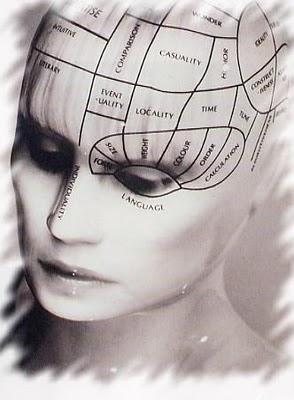
 Today, thanks to imaging techniques, the brain can be precisely described in functional areas. Each sense corresponds to one or several primary functional areas: a primary visual area, which receives information perceived by the eye; a primary auditory area, which receives information perceived by the ear, etc.
 Several regions are linked to the production and comprehension of language. They are sometimes described separately by physiologists, and the public which remembers these partial descriptions may gain the impression that the brain functions area by area. This would be consistent with the image that, at any one moment, only a small region of the brain is active but this is not what occurs.
 In the 1930s, Karl Lashley explored the brain using electric shocks. As many areas of the brain did not react to these shocks, Lashley concluded that these areas had no function. This is how the term “silent cortex” came into circulation. This theory is now judged to be incorrect. Dubious interpretations of the brain’s functioning have also fuelled this myth.
 Today, thanks to imaging techniques, the brain can be precisely described in functional areas. Each sense corresponds to one or several primary functional areas: a primary visual area, which receives information perceived by the eye; a primary auditory area, which receives information perceived by the ear, etc.
 Several regions are linked to the production and comprehension of language. They are sometimes described separately by physiologists, and the public which remembers these partial descriptions may gain the impression that the brain functions area by area. This would be consistent with the image that, at any one moment, only a small region of the brain is active but this is not what occurs.