 Español
 Português
"Understanding the Brain", The Birth of a Learning Science, 2007, page 110
What is a “Neuromyth”?
Science advances through trial and error. Theories are constructed on the basis of observation which other phenomena come to confirm, modify, or refute: another theory, complementary or contradictory to the previous one, is then created, and so the process continues.
This bumpy advance of science is unavoidable but it has its drawbacks. One is that hypotheses which have been invalidated nevertheless leave traces and if these have captured a wider imagination, “myths” take root. These beliefs may have been demolished by science but they prove to be stubbornly persistent and passed on through various media into the public mind.
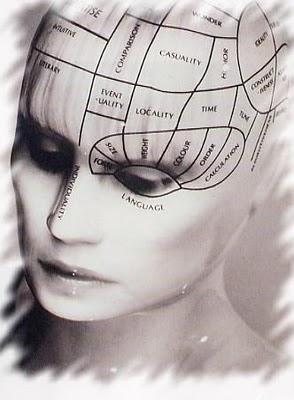
 Neuroscience is inevitably caught up in this phenomenon. Some expressions in the English language confirm this: “number sense”, for example, derives from the research of a German anatomist and physiologist, Franz Joseph Gall (1758-1828). By examining the heads of convicted living criminals and dissecting the brains of deceased ones, Gall established phrenology theory: a particular talent would produce an outgrowth on the brain which pushes on the bone and distorts the skull. By feeling the head, Gall boasted that he could identify the criminal from the honest man, a “maths” person from a “literary” one.
 Phrenology has long been superseded, indeed discredited. To be sure, certain areas of the brain are specialised more than others with certain functions. But, contrary to the regions that Gall thought he had identified, it is instead a question of functional specialties (such as image formation, word production, tactile sensibility, etc.) and not of moral characteristics like kindness, combativeness, etc.(1)
 Science itself is not solely responsible for the emergence of such myths. It is often difficult to understand all the subtleties of a study’s findings, still more its protocols and methodological details. Nevertheless, human nature is often content with – even takes delight in – quick, simple, and unequivocal explanations. This inevitably leads to faulty interpretations, questionable extrapolations, and, more generally, the genesis of false ideas.
In the next posts, we examines one by one the main myths belonging to brain science, with particular attention given to those most relevant to learning methods. For each myth, a historical look will explain how the idea took hold and then the current state of scientific research on the subject will be reviewed. Ironically perhaps, some myths have actually been beneficial to education in that they provided “justification” for it to diversify. But, mostly they bring unfortunate consequences and must therefore be dispelled.
This bumpy advance of science is unavoidable but it has its drawbacks. One is that hypotheses which have been invalidated nevertheless leave traces and if these have captured a wider imagination, “myths” take root. These beliefs may have been demolished by science but they prove to be stubbornly persistent and passed on through various media into the public mind.
 Neuroscience is inevitably caught up in this phenomenon. Some expressions in the English language confirm this: “number sense”, for example, derives from the research of a German anatomist and physiologist, Franz Joseph Gall (1758-1828). By examining the heads of convicted living criminals and dissecting the brains of deceased ones, Gall established phrenology theory: a particular talent would produce an outgrowth on the brain which pushes on the bone and distorts the skull. By feeling the head, Gall boasted that he could identify the criminal from the honest man, a “maths” person from a “literary” one.
 Phrenology has long been superseded, indeed discredited. To be sure, certain areas of the brain are specialised more than others with certain functions. But, contrary to the regions that Gall thought he had identified, it is instead a question of functional specialties (such as image formation, word production, tactile sensibility, etc.) and not of moral characteristics like kindness, combativeness, etc.(1)
 Science itself is not solely responsible for the emergence of such myths. It is often difficult to understand all the subtleties of a study’s findings, still more its protocols and methodological details. Nevertheless, human nature is often content with – even takes delight in – quick, simple, and unequivocal explanations. This inevitably leads to faulty interpretations, questionable extrapolations, and, more generally, the genesis of false ideas.
In the next posts, we examines one by one the main myths belonging to brain science, with particular attention given to those most relevant to learning methods. For each myth, a historical look will explain how the idea took hold and then the current state of scientific research on the subject will be reviewed. Ironically perhaps, some myths have actually been beneficial to education in that they provided “justification” for it to diversify. But, mostly they bring unfortunate consequences and must therefore be dispelled.
"Understanding the Brain", The Birth of a Learning Science, 2007, page 110
See Dispelling “Neuromyths” in this blog.